
Sunscreen Fabric Blinds: The Engineered Solution for Modern Glazing


Sunscreen fabric blinds have firmly established themselves as an essential, engineered component within the high-performance building envelope. Systems utilizing precision textiles like the L1-500 series function as a dynamic, tunable filter, actively managing the relationship between interior spaces and the external environment to enhance occupant comfort, reduce energy consumption, and preserve aesthetic integrity.
The Tripartite Performance Mandate
The efficacy of these systems stems directly from the optical properties of the fabric, which deliver three interconnected benefits:
Visual Comfort and Glare Elimination: The primary day-to-day function. By diffusing direct sunlight, sunscreen fabric blinds eradicate harsh glare on computer monitors, televisions, and worksurfaces. This reduction in visual discomfort is critical for maintaining productivity in offices and comfort in homes, enabling the full use of perimeter spaces without reliance on artificial lighting or physical discomfort.
Solar Heat Gain Control: A significant energy-saving attribute. The fabric reflects and absorbs a substantial portion of the sun's infrared radiation before it penetrates the interior. This passive cooling effect directly reduces the cooling load on HVAC systems, leading to lower energy costs and supporting compliance with increasingly stringent building energy codes and green certification programs (e.g., LEED, BREEAM).
View Preservation and Daylight Harvesting: Unlike opaque alternatives, these blinds maintain a visual connection to the outdoors. This preserved view is psychologically beneficial, reducing feelings of confinement. Furthermore, they allow the controlled ingress of natural, diffused light, supporting circadian rhythm regulation and reducing the need for artificial lighting during daytime hours—a practice known as daylight harvesting.
The Indispensable Foundation: Fabric Quality
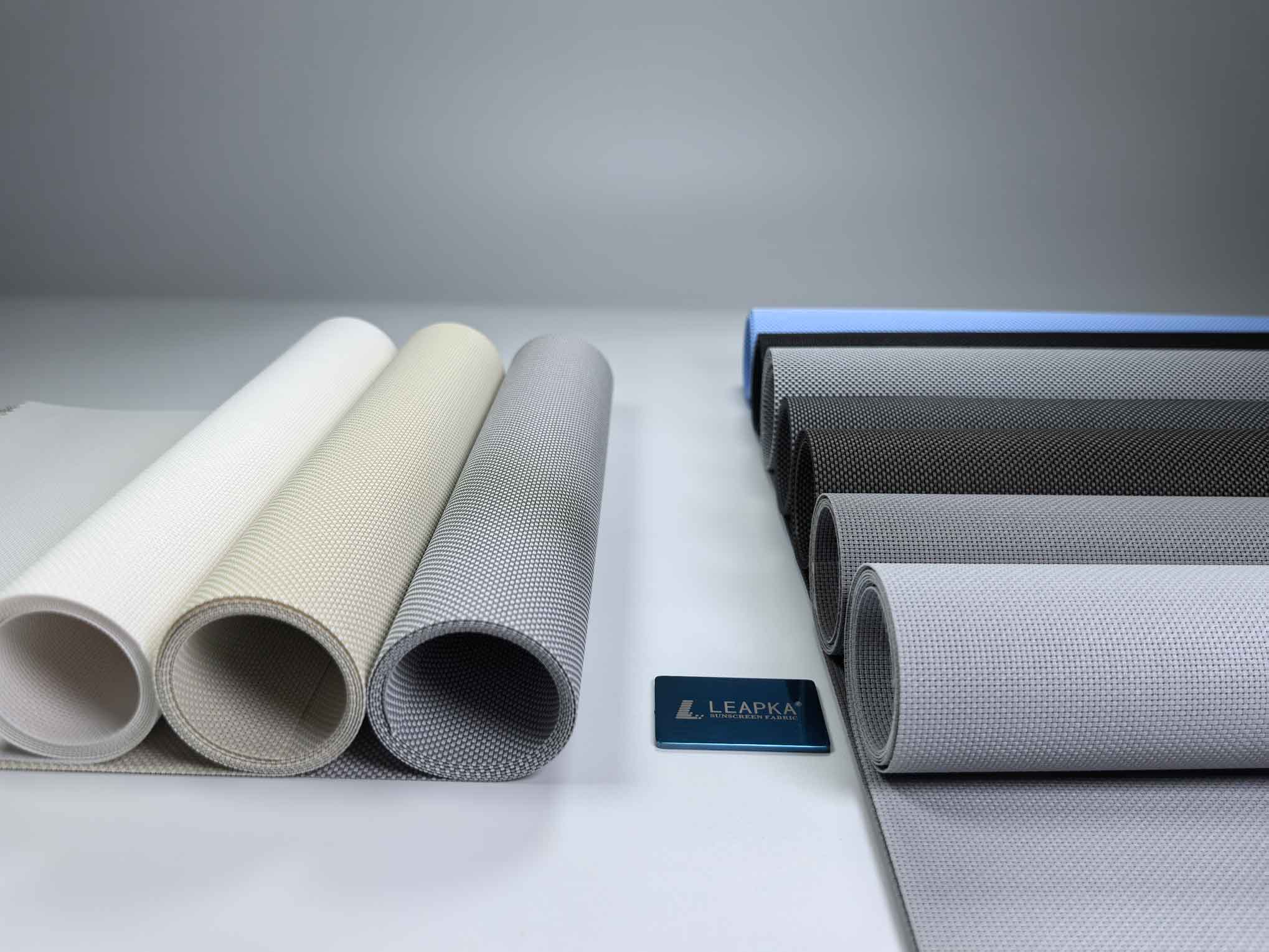
The blind system's performance is wholly dependent on the quality of its Sunscreen fabrics. The L1-500 series exemplifies the necessary engineering:
Performance Consistency: The guaranteed 5% openness factor is a certified metric, allowing architects and engineers to accurately model its impact on daylighting and thermal loads during the building design phase.
Durability and Stability: The 420 g/m² density and PVC coating ensure the fabric resists sagging, maintains its dimensional stability across temperature fluctuations, and withstands years of cyclic operation without degradation of appearance or function—key for commercial Roller blinds Fabrics.
Aesthetic Integration: The extensive color and pattern range ensures the functional element can be seamlessly incorporated into the interior design scheme, transforming it from a mere utility into a cohesive design feature.
Integration into Intelligent Building Ecosystems
Modern installations are rarely passive. Sunscreen fabric blinds are increasingly integral to automated building management.
Automation and Control Systems: Motorization enables pre-programmed operation (e.g., responding to solar path) or integration with light sensors and Building Management Systems (BMS) for fully automated, optimized environmental control based on real-time conditions.
User Accessibility: Control is facilitated through intuitive interfaces like wall stations, remotes, smartphone apps, or voice-activated systems, providing occupants with effortless adjustment to suit changing needs, tasks, or preferences.
In conclusion, high-performance sunscreen fabric blinds represent a mature and vital technology for contemporary architecture. By specifying rigorously engineered Roller blinds Fabrics like the L1-500 series within well-designed systems, professionals deliver a solution that actively enhances human comfort, improves building efficiency, and contributes meaningfully to the quality and sustainability of the built environment.
Related recommendations
See more >>


